Unnatural

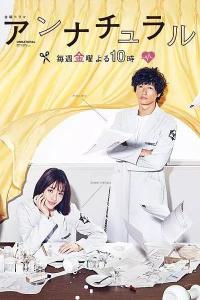
Title: Unnatural
Alternative Title:アンナチュラル, Annatsuraru, Annachuraru
Country of Origin: Japan
Episodes: Television Show (10 Episodes)
Year: 2018
Genres: Private Detective, Police Detective, Scientific Evidence, Autopsy / Pathology, Journalist
As crime rate rise, so too do the number of ‘unusual deaths’, those that occur for unidentified reasons and require deeper investigation. The greatest threat are those cases involving the unknown killer — a poison, chemical, or cause of death that is untraceable to the naked eye and that may even escape traditional autopsy methods.
This is where UDI (Unnatural Death Institute) steps in to offer their assistance. Working in partnership with the Ministry of Health, Labour, and Welfare, UDI takes on cases that the police failed to autopsy for various reasons.
Some cases arise after police have failed to find sufficient reasonable cause to warrant an autopsy and have deemed the death “natural” (or more concerning “suicide”). In this situation, the cases are brought to UDI from the private sector; parents, spouses, and friends requesting further investigation into the cause or circumstances of death.
Others involve police departments that are either too overwhelmed or lack sufficient funding to perform the autopsy themselves. For whatever reason, the UDI institute is the last chance families have to find answers before the remains undergo cremation and evidence is lost forever.
Into this office has come new intern Kube Rokuro, a young man who dropped out of medical school and is still seeking to find his purpose and mission in life. His passion is slowly sparked as he forges relationships with his colleagues Mikoto Misumi, Shoji Yuko, Kei Nakado, and Kamikura Yasuo and begins to share in their desire to give answers to the families and bring justice to the victims. But the task is not easy, as unnatural deaths are the most difficult to solve and hidden within the background are the growing signs that a previously unknown serial killer waits to be unmasked.
MAIN CAST
Kubota Masataka — Kube Rokuro
Ishihara Satomi — Misumi Mikoto
Iura Arata — Nakado Kei
Matsushige Yutaka — Kamikura Yasuo
Ichikawa Mikako — Shoji Yuko
PRODUCERS
Directors: Tsukahara Ayuko, Murao Yoshiaki, Takemura Kentaro
Screenwriters: Nogi Akiko

Plot
Acting
Technical Elements
After spending quite a bit of time buried in European mysteries (namely ‘Murder In’ and ‘Unidentified’), we decided this past week to return to one of the great producers of international detective shows — Japan!
“Along with a team that also comprises a technician and a recorder, the UDI is tasked to investigate a range of baffling deaths. These include an apparent suicide that isn’t quite what it seems, a “poisoning” case involving an apparent heart disease victim…and more! Will Mikoto Misumi and the gang solve all the mysteries that come before them?”
– Viki (Link)

‘Unnatural’ (アンナチュラル) tells the stories of UDI, a relatively new forensic organization that offers autopsy and forensic investigative services to the public and private sectors. The company is still working to develop relationships and trust with the public and struggles to maintain its independence and integrity in the face of pressure from its sponsors and legal partners (police and prosecution) who provide the necessary funding and networking needed to maintain operations.
UDI is headed by Kamikura Yasuo, an older gentleman whose belief in the need for an independent program dedicated to forensic autopsy stems largely from his service during the aftermath of the 2011 earthquake and tsunami. Yasuo was called to the front lines to assist with identifying and processing remains, a job he discovered was made infinitely more difficult by an overwhelmed system, outdated technology, and insufficient medical and dental records.
He is now devoted to building a highly advanced team of medical professionals who work alongside governmental, medical, and legal organizations to resolve cases that require a more in-depth examination. Their specialization lies in handing “Unnatural Deaths” — cases where the precise cause of death is technically “unknown” and generally listed as suicide or some form of coronary heart disease by police. According to Yasuo, 80% of all cases involving ‘unnatural deaths’ in Japan are closed without an autopsy and the remains are cremated before further investigation can be completed. Whether the police simply lack the funding to handle the cases or whether they failed to identify signs of foul play due to an unusual cause of death, those invested have one final alternative — UDI.
In such cases, the UDI team is called in to determine whether the cause of death was accurate and if there was an underlying factor (e.g., carbon monoxide poisoning caused the heart disease). The two head specialists on the team (Misumi and Nakado) offer significant expertise, having 4,500 autopsies under their belts combined. When unidentified remains are uncovered, when families dispute the listed cause of death, or when the government is simply too overwhelmed, UDI steps in to find the answers.
The show is relatively PG for most of the season with the more gruesome imagery (largely blood splashes) not appearing until the last couple of episodes. The show was episodic until the last two episodes as each told the story of a different victim. Within each investigation was greater discourse into a societal concern, such as bullying, ethics in journalism, vigilante justice, family relationships, and abuse of employees in the workplace.
As with most Japanese detective shows, there is a significant combination of psychological and scientific elements to each investigation. The team frequently is forced to better understand both the victim and the assailant to identify the potential cause of death; then they turn to science to prove it. Or perhaps they identify the cause of death and use this information to provide the families with better insight into why their loved one passed on.
In addition to the main UDI team, there is a wide array of assisting characters including the two lead police detectives who often work with UDI; the funeral director who frequently directs cases their way and assists as needed; and various medical professionals who provide their expertise or access to various public records. The acting amongst the side characters was pretty decent, and the cast as a whole was largely relatable. You come to really, REALLY loathe the main villains, but that is a sign of good storytelling.
I will say that Misumi occasionally got on my nerves with her ‘holier-than-thou’ approach, especially towards Nakado. She puts her nose into things and follows people around when it really goes beyond her professional role which is never attractive to me. She denigrates him and makes demands as the story progresses when she is not his superior and is not position to take that stance. While her rigid code of ethics is worth praising, she is also relatively unapologetic when that code of ethics harms her friends. Sometimes taking the ethical stance should also be accompanied with recognition and empathy for how one’s actions impact others.
One interesting ethical commentary the viewers took away from the show was the theory that truth is more important than justice for forensic professionals. Their job was not to be responsible for the outcome of their findings but rather to present the scientific facts for the lawyers to handle. This reminds me of the recent real world case where famous forensic scientist Henry Lee was found to have fabricated evidence in multiple cases. The result was the incarceration of two teenagers for more than three decades for a crime that the court now says lacked evidence of being connected to them (Link). Unfortunately, this now calls into question his testimony at more than 8,000 cases over the years.
The show is short but interesting; the technical effects were decent for its production level. It had some comedy mixed within but was largely a serious drama, little of the over-embellishments or over-acting that sometimes appears in Japanese shows. Certainly was a fun watch for the family of an evening and the crimes themselves were relatively well written. Some loose ends (especially at the end — I won’t go into those because I don’t want to spoil it), but by and large the causes of death and motives were unusual and it offered something new. I think I still like Galileo or Mr. Brain better in terms of ‘scientific-themed’ mysteries . . . but this was still a cool drama to watch.
Have you seen Unnatural? What did you think?!
*This post may contain affiliate links
Follow us now for more mysterious reviews, stories, and recommendations!